Nova Analytics Project
Nova Analytics is an end-to-end analytics portfolio project built around a global super-app marketplace dataset. We regenerated the dataset for realism, loaded it into BigQuery, wrote SQL queries and dbt models from staging to marts, used Python/Jupyter for modeling and anomaly analysis, and published the findings through Tableau dashboards and this Zensical writeup site.
Quick summary
This project demonstrates SQL querying, dbt modeling, BigQuery warehousing, Python analysis, Tableau dashboarding, and business storytelling in one tested analytics pipeline. The analysis connects marketplace scale, demand drivers, category performance, customer value, repeat behavior, and transaction risk to practical recommendations.
Project at a Glance
| Area | Summary |
|---|---|
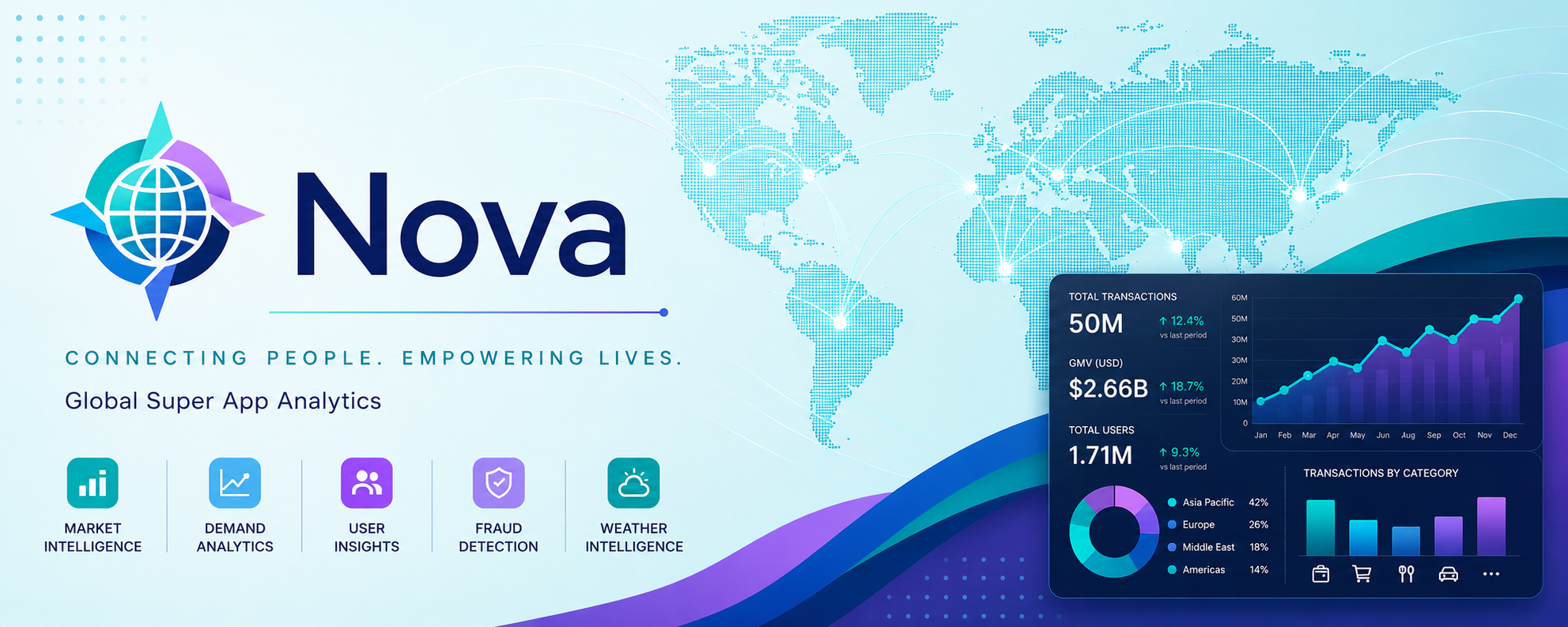
| Dataset scale | 50M interactions, 1.71M active users, 50K services |
| Marketplace value | $2.66B GMV across 2024 |
| Coverage | 16 city markets across 4 continents and 8 regions |
| Analysis output | 7 Tableau-backed analysis pages |
| Pipeline | regenerated dataset, BigQuery, SQL, dbt staging/intermediate/marts, Python notebooks, Tableau |
Analysis Portfolio
Each analysis page focuses on a business question and connects the Tableau dashboard to the underlying data pipeline.
-
Marketplace scale, headline GMV, customer base shape, and the overall analytics pipeline.
Author: Doruk Alkan
-
Regional performance, market opportunity scoring, and growth prioritization across 16 markets.
Author: Doruk Alkan
-
Weather effects, service supply, timing patterns, demand modeling, and market profiles.
Author: Doruk Alkan
-
Category GMV, service reliability, operational risk, and where category growth needs stabilization.
Author: Yasemen Nur Salım Dündar
-
Repeat behavior, suspicious transaction patterns, anomaly scoring, and risk-review priorities.
Author: Yasemen Nur Salım Dündar
-
Membership tiers, acquisition channels, lifecycle behavior, and customer value concentration.
Author: Merve Kaymaz
-
Recency, frequency, monetary segmentation, retention priorities, and customer development opportunities.
Author: Merve Kaymaz
dbt Models
-
External enrichment inputs used for geography, weather, and macro context.
-
Clean source interfaces for transactions, users, services, markets, and external context.
-
Reusable SQL business logic for demand, service health, customer behavior, and RFM scoring.
-
Final Tableau and notebook-facing models used by the analysis pages.
Further Info
-
Source dataset, regeneration rationale, corrected data scope, and what the project contains.
-
External weather, country metadata, and macroeconomic sources used for enrichment.
-
Contributor ownership across analysis, modeling, dashboards, and writeups.
-
Source code, SQL queries, dbt models, notebooks, dashboards, and site files.